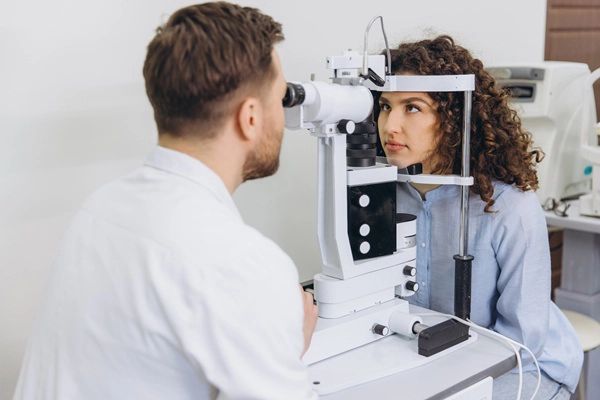
Eye exams can detect vision changes and maintain eye health. However, seasonal allergies can sometimes complicate the process. Redness, itching, tearing, and swelling, among other allergy symptoms, can easily skew results. By understanding the potential impact of seasonal allergies on eye exams, patients can take steps to ensure a more comfortable and effective visit with the optometrist.
Getting an eye exam with seasonal allergies
Undergoing an eye exam while experiencing seasonal allergy symptoms may present unique challenges. Irritation and inflammation caused by pollen, mold, and other allergens can change how the eyes respond during visual testing. These symptoms can also interfere with the optometrist’s ability to view ocular structures (e.g., excessive tearing or redness may obscure important details).
In particular, the presence of allergic conjunctivitis, a common reaction to airborne allergens, can temporarily alter vision quality. This may cause fluctuations in visual acuity results or make certain diagnostic tests less precise. While seasonal allergies do not typically cause long-term harm to vision, they can make the evaluation process less comfortable and slightly less accurate. The good news is that recognizing these effects is the first step toward addressing them.
Managing allergy symptoms for an eye exam
Some preparation before an eye exam can reduce the influence of seasonal allergies on testing results. Here are a few simple yet effective steps patients can take if they have allergies:
Get strategic with scheduling
Timing an eye exam for a period when allergy symptoms are minimal can significantly improve the experience. Allergy season peaks at different times of the year depending on the region, so scheduling outside of these high-activity windows can reduce discomfort during the visit. For example, in some areas, spring and early fall are high-pollen times, so patients with allergies can try booking exams during the winter months.
When whole seasons are unavoidable, booking appointments in the morning can help. Pollen levels often rise throughout the day, meaning early appointments may take place before symptoms become more noticeable. The optometrist can also discuss symptom patterns to help the patient select the most favorable time for accurate and comfortable testing.
Try allergy medicine
Allergy medication can be highly effective in managing symptoms on the day of an eye exam. Antihistamines, whether taken orally or as eye drops, can help decrease itching, redness, and tearing, allowing for a clearer examination. However, it is important to choose an option that does not cause side effects, like dryness, that could also impact test results.
Minimize triggers
Avoiding exposure to allergens in the hours leading up to the eye exam can help keep allergy symptoms under control. This may mean limiting time spent outdoors during high-pollen days or using air filtration indoors to reduce airborne irritants. In addition, washing the face and eyelids before the appointment can help remove pollen and other particles that may have collected on the skin and lashes. If one needs to be outdoors, wear sunglasses as a protective barrier against allergens. These small but effective steps can help ensure the optometrist receives a clearer view during the eye exam.
Call for more information
Seasonal allergies do not have to stand in the way of an eye exam. With some planning and symptom management, it is possible to minimize discomfort and ensure accurate results. Call our New Rochelle team to learn more about how we can help accommodate seasonal allergies during eye exams.
Request an appointment here: https://brighteyesny.com or call Bright Eyes Optometry at (914) 730-9574 for an appointment in our New Rochelle office.
Check out what others are saying about our services on Yelp: Eye exam in New Rochelle, NY.
Recent Posts
Eye irritation can have many causes, which is why an eye doctor looks beyond redness and itching before recommending treatment. Allergies often cause recognizable symptoms, but dry eye, infections, and other conditions can create similar discomfort. A careful eye examination helps identify the source of the problem and determine what type of care may provide…
Eyeglasses help the eyes focus light more clearly, allowing patients to see nearby and distant objects with clarity. When you get an eye exam, the optometrist creates a prescription while measuring how the eyes bend light. Using that prescription, an optical lab creates a custom pair of eyeglasses with unique lenses that match each eye.…
Dry eye treatment can help relieve burning, stinging, redness, blurry vision, and irritation. While dry eye is common, that does not mean patients have to tolerate the discomfort of it. Symptoms may result from poor tear quality, insufficient tear production, eyelid inflammation, screen use, contact lens wear, medications, or environmental triggers. An optometrist can identify…
Orthokeratology, or ortho-k, is a non-surgical vision correction that helps patients see clearly during the day without glasses or contact lenses. Ortho-k contact lenses gently reshape the cornea while the patient sleeps. In the morning, you can take them out; there is no need for prescription glasses or daytime contact lenses. Ortho-k is an effective,…